
Artificial intelligence is changing the world. At the heart of this change is the Neural Network. These systems learn from data in a way that feels very human. They recognize patterns, understand images, and even generate text.
When I first started learning about neural systems, I was surprised by how powerful they were. Even simple models could solve problems that traditional programming could not. Over time, I realized that understanding the right algorithms makes a huge difference in building strong AI solutions.
In this article, you will discover six powerful neural network algorithms. You will also learn how they work, why they matter, and how they are used in real-world AI projects.
What IS Neural Network Means
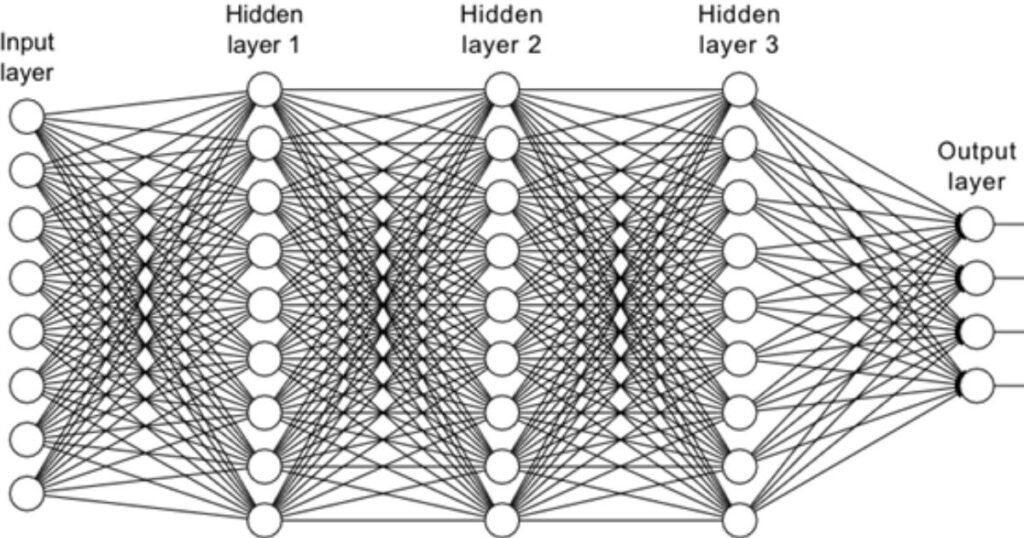
A Neural Network is a computing system inspired by the human brain. It is made of layers of connected nodes called neurons. These neurons process information and pass it forward.
Neural networks learn from data. They adjust internal values called weights. This helps them improve predictions over time.
When we talk about neural network algorithms, we mean the different ways these networks are structured and trained.
These algorithms help machines:
- Recognize images
- Understand speech
- Translate languages
- Predict outcomes
Many of these systems are part of modern deep learning algorithms and advanced AI models.
Why Neural Network Is Important
Neural networks are everywhere today. They power voice assistants, recommendation engines, medical tools, and financial systems.
Here is why this topic matters:
- According to industry research, over 70% of modern AI systems use neural-based learning.
- Tech giants like Google, Amazon, and Microsoft rely heavily on neural architectures.
- Healthcare systems use them to detect diseases faster.
- Banks use them to detect fraud in real time.
When developers understand these algorithms, they can build smarter, safer, and more useful AI tools.
From my own experience, learning these concepts helped me move from basic machine learning to advanced AI development. It changed how I design intelligent systems.
Key Benefits of Learning Neural Network Algorithms
Learning these algorithms gives you practical and career benefits.
1. Better Problem-Solving Skills
You learn how to break complex problems into small, solvable parts.
2. Higher Career Opportunities
AI engineers and deep learning experts are in high demand globally.
3. Ability to Build Real AI Products
You can create chatbots, recommendation engines, and image classifiers.
4. Deeper Understanding of AI Models
You understand how decisions are made inside the system.
5. Strong Foundation in Deep Learning
You build a strong base for future AI work using deep learning algorithms.
Guide to Understanding Neural Network Algorithms

Before learning the six algorithms, it is important to understand the basic workflow of how a Neural Network works.
Data Collection
You collect large amounts of relevant data.
Example: Images, text, or numerical values.
Data Preparation
You clean the data.
You remove errors and normalize values.
Model Design
You choose the network structure.
You decide how many layers and neurons to use.
Training the Model
You pass data through the system.
The system adjusts weights to reduce errors.
Testing and Validation
You test the model on new data.
You check accuracy and performance.
Deployment
You deploy the trained model into real-world systems.
This step-by-step process forms the backbone of all modern AI models.
6 Powerful Neural Network Algorithms You Should Know
Below are the six most important and widely used algorithms.
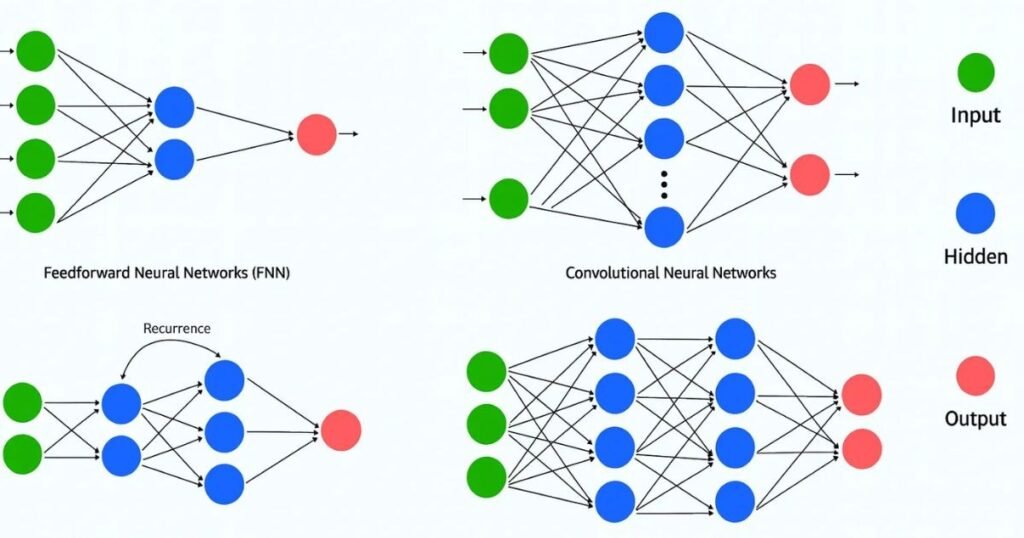
1. Feedforward Neural Networks (FNN)
This is the simplest form of Neural Network. Data moves in one direction only. From input layer to output layer.
Key Features:
- Simple structure
- Easy to understand
- Used for basic classification
Where It Is Used:
- Spam detection
- Simple prediction systems
In my early AI experiments, this was the first model I ever trained.
2. Convolutional Neural Networks (CNN)
CNNs are designed for image and video processing. They use filters to detect patterns like edges and shapes.
Key Features:
- Works well with images
- Uses convolution layers
- Highly accurate for visual tasks
Where It Is Used:
- Face recognition
- Medical image scanning
- Self-driving car vision systems
CNNs are one of the most powerful deep learning algorithms available today.
3. Recurrent Neural Networks (RNN)
RNNs handle sequence-based data. They remember previous information.
Key Features:
- Memory-based structure
- Works with time-series data
- Handles text and speech
Where It Is Used:
- Speech recognition
- Text prediction
- Language translation
This type of Neural Network is very useful for chatbot systems.
4. Long Short-Term Memory Networks (LSTM)
LSTM is a special type of RNN. It solves the problem of forgetting long-term information.
Key Features:
- Better memory control
- Reduces data loss
- Handles long sequences
Where It Is Used:
- Voice assistants
- Stock market prediction
- Health monitoring systems
LSTM models are widely used neural network algorithms in advanced AI products.
5. Generative Adversarial Networks (GANs)
GANs involve two networks. One generates data. The other checks it for accuracy.
Key Features:
- Generator and discriminator models
- Creates realistic data
- Learns through competition
Where It Is Used:
- Image generation
- Video enhancement
- Deepfake technology
GANs are among the most exciting AI models in the modern tech world.
6. Transformer Networks
Transformers focus on attention mechanisms. They understand relationships between words in a sentence.
Key Features:
- Attention-based architecture
- Parallel data processing
- High performance in NLP tasks
Where It Is Used:
- Chatbots
- Machine translation
- Large language models
Transformers are now the backbone of many advanced deep learning algorithms.
Practical Tips for Working With Neural Networks
Here are some practical, experience-based tips:
- Start with simple models before complex ones.
- Always use clean and structured data.
- Monitor training time and hardware usage.
- Keep learning new updates in neural research.
- Experiment with different learning rates.
- Use visualization tools to understand loss curves.
These small habits can greatly improve your results.
Common Mistakes to Avoid
Many beginners make similar errors when working with Neural Network systems.
Avoid these mistakes:
1. Skipping Data Cleaning
Bad data creates bad models.
2. Using Overly Complex Models
Start small. Scale slowly.
3. Ignoring Overfitting
Always use validation data.
4. Poor Hyperparameter Tuning
Learning rate and batch size matter.
5. No Model Evaluation
Always test accuracy before deployment.
Real-Life Mini Case Study
A small e-commerce company wanted a better product recommendation system. They were using basic rule-based software. It was slow and inaccurate.
The team switched to a Neural Network approach.
Steps they followed:
- Collected user behavior data.
- Cleaned and categorized the data.
- Built a recommendation model using neural network algorithms.
- Trained the model with deep learning algorithms.
- Integrated it into their website.
Results:
- 35% increase in user engagement
- 28% more sales
- Faster page load times
This shows the real power of strong AI models in business.
Conclusion
Neural networks have become the foundation of modern artificial intelligence. By understanding these six powerful algorithms, you gain access to the core technologies behind smart systems. Learning how each Neural Network works helps you design better, safer, and more efficient solutions.
Whether you are building chatbots, vision systems, or predictive tools, mastering these ideas gives you a strong advantage. As the world moves deeper into AI, these skills will remain valuable, practical, and essential for long-term success.
FAQs
What is a Neural Network in simple terms?
It is a system that learns from data and makes decisions like a human brain. It processes input, finds patterns, and produces useful output.
Are neural network algorithms hard to learn?
They can be challenging at first. With practice, structured learning, and real-world projects, they become easier to understand.
What is the difference between machine learning and deep learning?
Machine learning uses basic algorithms. Deep learning uses complex layered networks and advanced deep learning algorithms.
Where are AI models used the most today?
They are used in healthcare, finance, marketing, transportation, and customer service systems.
How long does it take to learn neural networks?
It depends on your background. With daily practice, most beginners can understand basics within a few months.
Mini Disclaimer
This article is based on industry knowledge, personal learning experience, and general AI research. Results may vary depending on tools, data quality, and system design.
Author Note
Thank you for reading this guide. If you want more technology articles or need custom content, feel free to reach out anytime.