Electrical Engineering is one of the most exciting fields in the world of technology. It blends creativity, logic, and real-world problem-solving. When beginners build their first electrical engineering projects, they not only understand theory better but also gain confidence through hands-on learning. I still remember the first time I connected a simple LED circuit on a breadboard. The moment it lit up, the excitement pushed me to explore more projects.
If you’re starting today, you don’t need expensive tools or advanced skills. Simple projects help you learn fast and build a strong foundation. This guide will walk you through nine amazing beginner-friendly ideas, why they matter, and how you can start immediately.
What Does Electrical Engineering Mean

This topic focuses on practical, easy, and useful projects that beginners in Electrical Engineering can build. These projects use basic tools and components.
Most of them rely on:
- Breadboards
- Simple circuits
- Small sensors
- Batteries or low-voltage supplies
When we say electrical engineering projects, we specifically refer to small systems you can assemble to learn how electricity works, how components behave, and how different parts connect to complete a circuit.
These are not theoretical concepts; they are real, buildable projects that help you learn through doing.
Why Electrical Engineering Is Important

Many beginners struggle because they only study theory and avoid hands-on learning. But electrical concepts become easier when you build something with your own hands.
Here’s why this topic matters for learners:
- Hands-on learning boosts memory and understanding.
- You get real experience with tools and components.
- You build confidence by completing simple projects.
- You learn the difference between diagrams and actual circuits.
- Project work improves your portfolio and engineering skills.
- You understand safety, measurements, and troubleshooting.
According to recent STEM studies, students who build projects learn 35 50% faster than those who study only from books.
When I started practicing small circuits, I realized how connections, resistance, and voltage work in real life, things that textbooks can’t fully explain.
Key Benefits of Doing Beginner Electrical Engineering Projects

Here are the real advantages:
1. Clear Understanding of Basics
Projects help you understand current flow, voltage drop, and power usage.
2. Problem-Solving Skills
You learn how to fix mistakes and troubleshoot circuits.
3. Creativity and Innovation
Simple projects act as building blocks for bigger ideas.
4. Strong Foundation for Advanced Work
Complex systems become easier once you master the basics.
5. Boosted Career Potential
Practical skills set you apart in interviews and competitions.
6. Faster Learning Through Experience
Hands-on learning is the most effective way to understand electronics.
7. Fun and Motivation
Building things is enjoyable and pushes you to learn more.
Step-by-Step Guide for Beginners
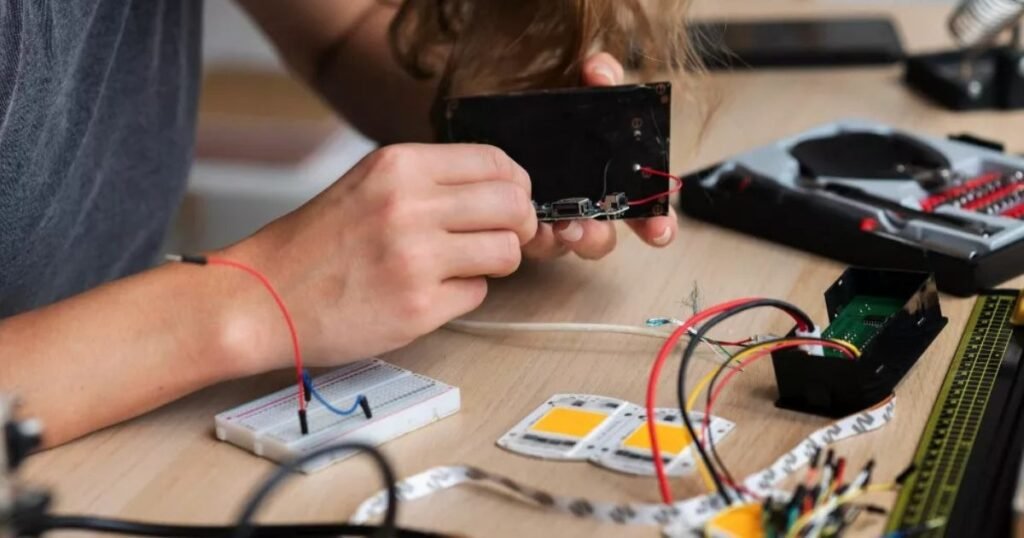
Before starting any project, follow this simple guide. These steps are based on my personal experience while helping students build their first circuits.
Gather Basic Tools
You don’t need expensive equipment.
Start with:
- Breadboard
- Jumper wires
- Resistors
- LEDs
- Sensors
- A 9V battery or USB power supply
- Small motors
- A multimeter
These are affordable and used in most Simple Projects.
Understand the Circuit Diagram
Take a moment to study how components connect.
Look at:
- Power source
- Ground connection
- Input/output points
Understanding diagrams helps you avoid mistakes later.
Build the Circuit Slowly
Place components one by one. Check connections after every step.
When I teach beginners, I always tell them, “Slow wiring prevents fast disasters.”
Test the Circuit
Use a multimeter to check:
- Voltage output
- Continuity
- Short circuits
Testing prevents component damage.
Troubleshoot Problems
If something doesn’t work:
- Check loose wires
- Reverse the wrong polarity
- Replace burned resistors
- Reduce power supply if needed
Troubleshooting builds real engineering skill.
Document Your Work
Take notes, pictures, or videos. This helps with learning and future reference.
9 Amazing Electrical Engineering Projects for Beginners
Below are the most practical, easy, and educational electrical engineering projects for beginners.
1. LED Blinking Circuit
This is the simplest project and perfect for absolute beginners.
Components Needed
- LED
- 220-ohm resistor
- Battery
- Breadboard
How It Works
Current flows through the resistor into the LED. The resistor controls brightness and prevents damage.
Why Beginners Should Try It
It teaches:
- Polarity
- Resistance usage
- Basic wiring
This was the first project I ever built. It helped me understand the importance of correct connections.
2. Light-Activated LED (LDR Circuit)
A fun project that turns light into a trigger.
Components
- LDR (Light Dependent Resistor)
- LED
- Resistor
- Battery
How It Works
The LDR changes resistance depending on light. The LED lights up when the environment becomes dark.
Skills Learned
- Sensor behavior
- Resistance variation
- Real-world application
This is often one of the best Simple Projects for students.
3. Mini USB Mobile Charger Circuit
A practical and very useful beginner project.
Components
- 5V voltage regulator
- USB port
- Capacitors
How It Works
The regulator converts higher voltage into a safe 5V USB output.
Skills Learned
- Voltage conversion
- Current control
- Safety precautions
4. Automatic Street Light System
A great introduction to automation.
Components
- LDR sensor
- Relay
- Bulb or small LED strip
How It Works
Lights turn ON during low light and OFF during daytime.
Skills Learned
- Relays
- Switching
- Power control
This type of project is commonly used in real electrical systems.
5. Temperature Monitoring System
A useful project that introduces sensors.
Components
- LM35 or similar temperature sensor
- LCD screen
- Battery or USB power
How It Works
The sensor outputs a voltage proportional to temperature. The LLCD is the reading.
Skills Learned
- Sensor interfacing
- Analog signals
- Display systems
6. Mini Solar Power System
A clean-energy project that teaches power generation.
Components
- Small solar panel
- Rechargeable battery
- Diode
- LED
How It Works
The solar panel charges the battery. The battery powers the LED.
Skills Learned
- Renewable energy
- Charging systems
- Power management
7. DC Motor Speed Controller
A great project that introduces motor control.
Components
- Potentiometer
- Motor
- Transistor
How It Works
The potentiometer changes the voltage supplied to the motor. This controls speed.
Skills Learned
- Variable resistance
- Motor behavior
- Load handling
8. Rain Alarm System
A simple and very interactive project.
Components
- Rain-detecting plate
- Buzzer
- Battery
How It Works
When raindrops create a short circuit between metal lines, the buzzer sounds.
Skills Learned
- Sensors
- Alarming systems
- Circuit logic
9. Motion Detector Using PIR Sensor
A useful project for home automation.
Components
- PIR sensor
- LED or buzzer
- Battery
How It Works
The PIR sensor detects movement. When triggered, it activates the LED or buzzer.
Skills Learned
- Automation
- Sensor processing
- Power management
This is one of the best projects to introduce hands-on learning in Electrical Engineering.
Practical Tips for Beginners
Here are practical, experience-based suggestions:
- Always double-check polarity before powering a circuit.
- Keep wires organized to avoid confusion.
- Start small, then upgrade your projects.
- Use a multimeter often — it’s your best friend.
- Practice soldering only after mastering breadboards.
- Make safety a priority when handling power sources.
- Learn to read component datasheets — they guide you properly.
These simple habits will save time and prevent mistakes.
Common Mistakes to Avoid
Beginners often repeat the same mistakes, so avoid these:
1. Using Wrong Resistors
Incorrect resistance can burn LEDs or sensors.
2. Loose Connections
Most circuit problems come from loose wires.
3. Not Understanding Voltage Limits
Know the maximum voltage each component can handle.
4. Rushing the Wiring Process
Fast work leads to more errors.
5. Ignoring Safety Rules
Never touch circuits with wet hands. Avoid metal surfaces while working.
Real-Life Example
Last year, I helped a group of first-year students build an automatic street light system. They were nervous because they had never built a circuit before.
Steps They Followed
- Studied LDR behavior.
- Built the circuit on a breadboard.
- Connected the relay carefully.
- Tested with different light levels.
Results
- The system worked perfectly.
- They presented it at a university event.
- Their confidence improved dramatically.
This small project helped them understand automation and electronics in real life. It showed them what Electrical Engineering truly feels like when applied practically.
Conclusion
Electrical Engineering becomes more meaningful when you learn through real projects. These nine beginner-friendly ideas help you understand circuits, sensors, motors, and power systems in the simplest way. Whether you’re building a rain alarm or a motion detector, each project boosts your confidence and sharpens your skills.
When you practice hands-on learning, concepts like voltage, current, resistance, and automation become easier to understand. These small steps prepare you for advanced engineering work and real-world problem solving. Start small, stay curious, and enjoy the journey of building your own electrical engineering projects.
FAQs
Are beginner electrical engineering projects expensive?
No. Most Simple Projects cost very little. You can start with LEDs, resistors, and batteries for under $5.
Do I need programming knowledge?
Not for the projects listed here. These are basic hardware circuits suitable for complete beginners.
How long does it take to finish a small project?
Most beginners can complete a project within 30–60 minutes after understanding the circuit diagram.
What is the best first project for learners?
The LED blinking circuit is the easiest and helps you understand voltage, current, and resistance.
How do I avoid damaging components?
Use proper resistors, check polarity, keep voltage low, and test gradually. A multimeter also helps prevent mistakes.
Mini Disclaimer
This guide is meant for educational purposes. Always follow safety rules and use low-voltage components to avoid damage or injury.
Author Note
Thank you for reading this guide. I wrote this article to make complex learning systems simple and clear. If you need more articles or want custom educational content, feel free to ask anytime.